Breaking Bread with Libation Bakery
Interview by Jeriah Fredericks
Photography by Jay Jay Manaka
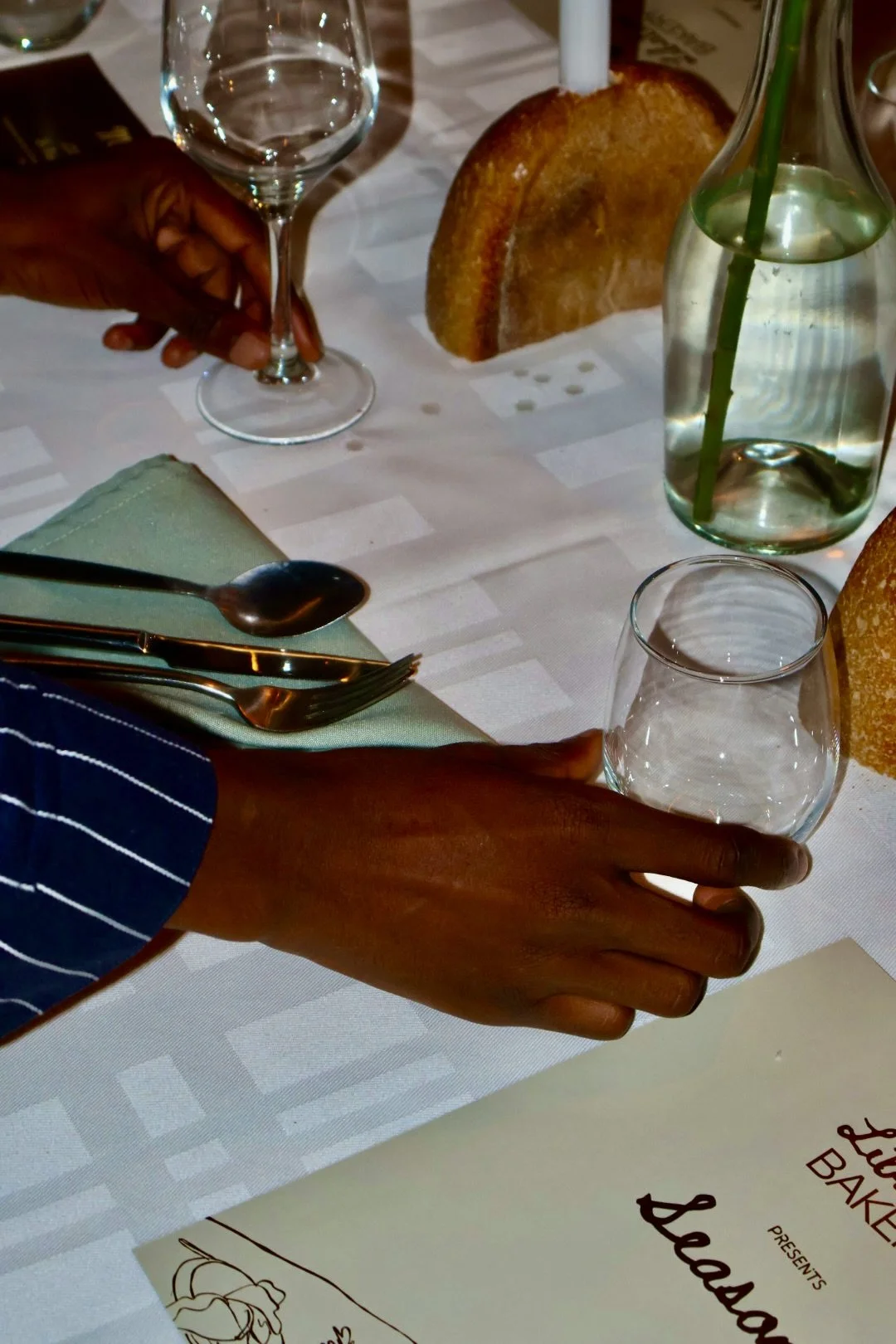
Cape Town is well renowned for its vibrant food scene. Restaurants populate every second block of the CBD with a plethora of options available for the adventurous local and tourist alike.
What I’ve certainly noticed become more prevalent since the COVID lockdown is the pop-up food scene in the city. Experiences which aren’t tied to a specific venue or location, but rove around the city plying their trade at everything from wine bars to dance events.
As someone who has spent most of his adult life in the hospitality industry, I’ve always kept a close eye on this pop-up scene, keeping my eye out for the latest trends and offerings.
But when I came across Libation Bakery, something about the way it was marketed stood out as different from the rest. So I reached out to find out what that ‘something’ was.
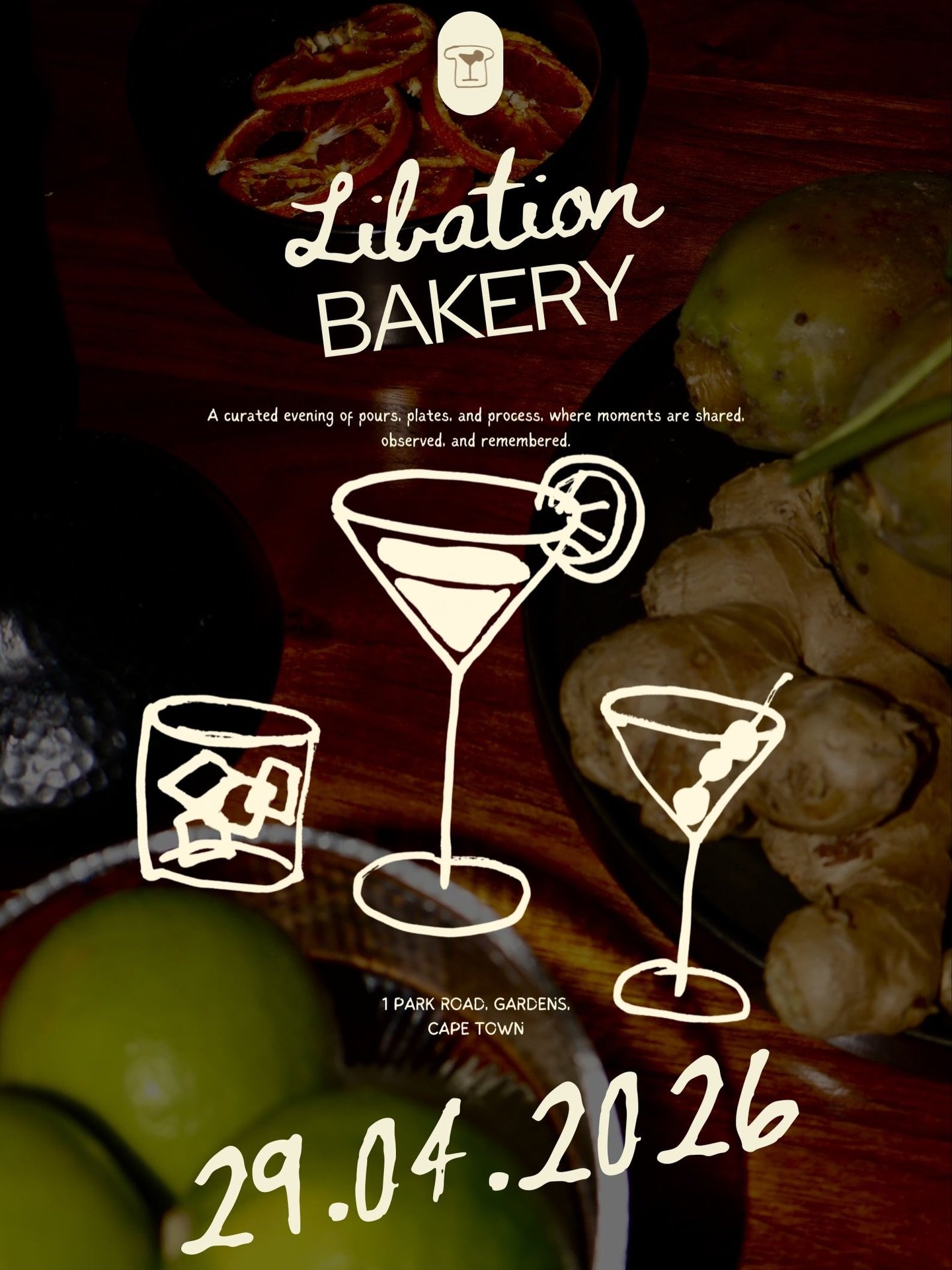
So gents, can you tell us what Libation Bakery is? From your individual perspectives?
Thato: Hey, I’m Thato, and along with Dwight (who couldn't be here for this chat) we make up the mixologists of the team. Libation is just a bunch of guys coming together to bring an idea to life. We’re bringing together food, pairings and a creative vision.
Tarik: I’m Chef Tarik Abdullah - the chef in the team. And Libation Bakery is an idea - the idea of each individual within the group expressing what we feel is important to us, but also important for anyone that wants to join us. It's just been an honour to be a visitor in this backyard. and to work with such a creative group of brothers.I’m honestly just looking forward to really expanding on the next steps of what we would like to see Libation Bakery go towards.
Luvuyo: I am Luvoyo “Boze” Kente and I am part of the creative team. I would like to say I'm the creative curator. Libation, well it was such a powerful idea when it first landed. It's something that we honestly felt is not only missing, in terms of the direction we were trying to go with and the approach that we took, but we also just felt that it's very important for us to come from a position of family and community, and join that with natural tastemaking.
From a curation/creative direction point of view, what I was trying to implement was the family dinner. Once you come to Libation, it's like you’re a part of this family of people that have come together for taste - and taste is a very wide word for us.
It's not only taste in food or culture, but it's like taste in community, taste in opinion, you know, and it was very important for us to create this platform. Besides us bringing all our talents together and all having a similar approach to our taste and outlook on life, it was just essential for us to bring that together and make this project happen in order to bring that to the public because we do feel like in the creative spaces we do not celebrate enough and we don't break bread enough. So I think the major aim of Libation Bakery is to break bread.
Everybody just thinks it's just putting something together, but like there's a technique to it and there's an understanding of it. And it’s lovely to be on the inside and see everybody perform their art form. Even for the rest of the team, it's amazing to see people perform at their highest level and to see the intricacies of their art form, you know?
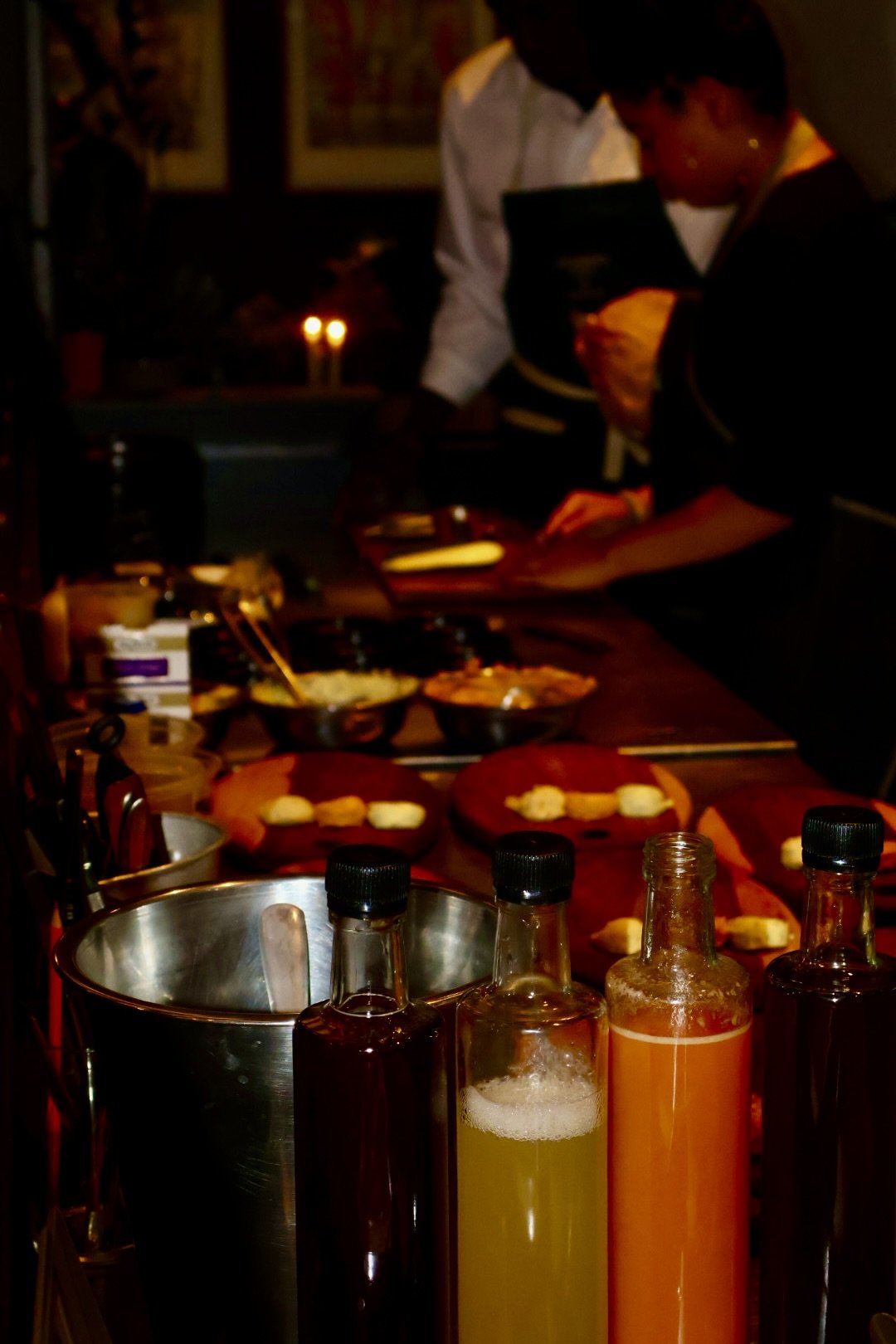
Ricky: So my name is Ricardo Nobangera. I go by the name of Ricky da Vinci. I think for me, it's like the process of giving, you know? The principle of giving - just giving your best, just giving people something that they want, something that they don't know that they want, You're giving them that and you're giving them all of it, you know, like you're pouring yourself into it. Putting in the effort to make something really good, right? So that's what it is for me.
JJ: Jay Jay Manaka is my name, and to answer what Libation is for me? Well, the definition of libation, centres around the idea of a ritual of pouring, usually wine, into some sort of space, and essentially it is a sacrifice.
Now, my interpretation of that within our context would be each person comes with their skills. You are ineffective if you're trying to produce something or add something that isn't speaking to your truer self. Now, everyone has things that they bring to the table and effectively our sacrifice is what we bring.
The drinks, the food, the illustration, the creative direction, and when all these things are aligned. You see something greater being produced.
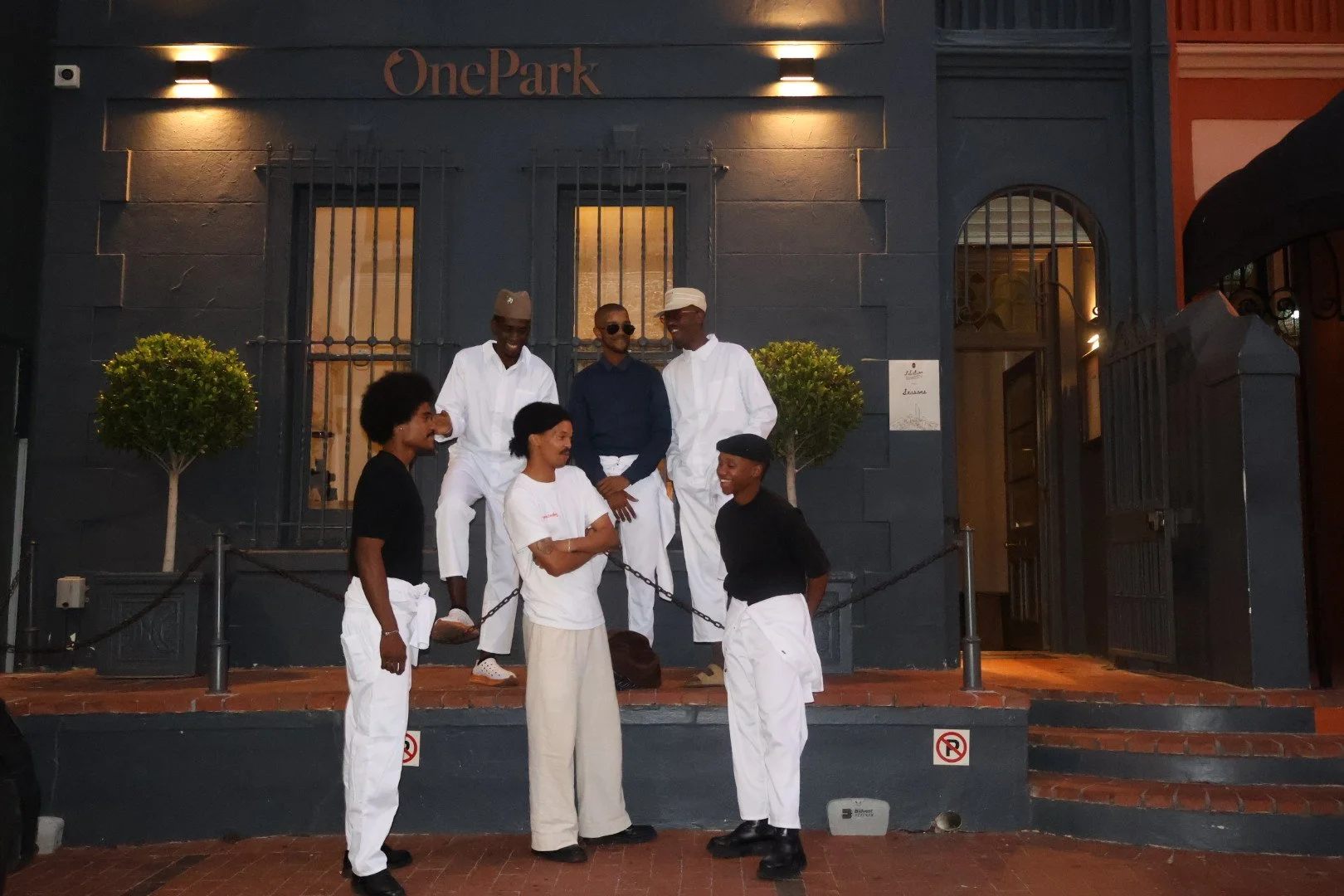
From left (back row):Tarik Abdullah, Ricardo "Ricky Davinci" Nobangela, Luvuyo “Boże” Kente,Thato Human, Dwight Klue, JJ Manaka
Speaking of that, how exactly does the confluence of all these creative inspirations and creativity come to be - what has the greater process been like for everyone? Coming together on a project like this and bringing your own voice, your own creativity, but still having that form part of the tapestry of the greater Libation?
Jay Jay: So where things start is the willingness to accept that there's a lot to learn.
We're all coming from different disciplines and different backgrounds. And we've all got different perceptions on how to do things. So it's required us to be open to understanding how your skill and what you put forward can add to my skill.
And if I need to adjust, I will adjust so everything comes out looking a lot more efficient and effective. A practical example of this is our rollout campaign. You're looking at a combination of different disciplines - how do you effectively put that into a 7-second video?
Colours, theme, lighting, the idea of drinks being poured, the idea of putting ingredients together. I think that is the perfect representation of how we have put together our skills into producing something.
Tarik: When I moved out here, I had a plan. But then that plan changed. And for numerous reasons. The one thing was I wanted to create something representing blackness. And blackness to me is very important. And the only way I was gonna do this is by forming a team like Voltron, but full of black creatives that know what they know what they do.
I know my part and I just stick with that. Nothing else. I leave the rest to the experts in their field. But what happens when you have open minds, and understand each other, and just hang out? It makes it very easy to create a cohesive brand. And honestly, I've just been learning - because I am technically the old man in the group. So it's actually cool to learn a little bit more about Cape Town, about each one's skill set, and it's just been a blessing. But the number one thing - It's got to be black. Food representation on a refined level in Cape Town is very minimal when it comes to our people.
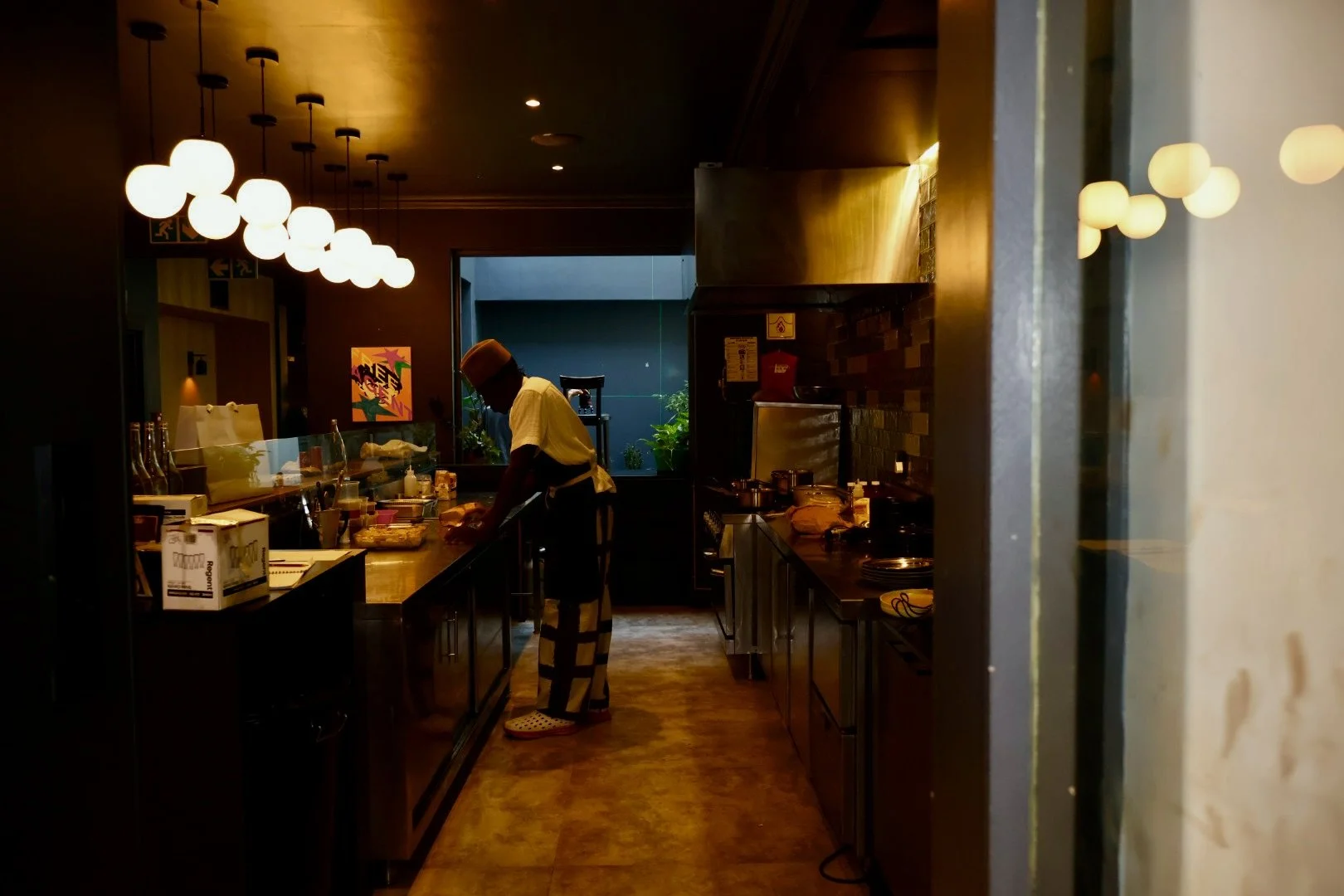
Thato: I just wanted to add to Chef T's point - about his ability to like see the different skill sets that everyone has and his ability to bring that out of people is just so fascinating to have watched them act out.
This went from just us spitballing ideas to getting the spot, and then the team just kind of like assembled, so organically, and then all of a sudden this thing is on the way. We've got a whole social media timeline, we've even got a sponsorship brief. It all came together so perfectly and so seamlessly. And I think that's due in part to Chef T’s ability to bring these like minded individuals together.
And for that, I thank you. I thank you for bringing us together. I thank you for wanting to push this idea and this space and this force into existence and um, Also, I want to thank you reigniting that enthusiasm to create within me.
Luvuyo: I think it's very prevalent, especially in this city where so many of us are underrepresented, especially within the creative sphere, and especially in a sphere like this.
So it's very important for us to have that representation and to show the next generation, for anybody who's coming behind us, that it's possible. That if you’re with like-minded people who have the exact same ideas as you, that are able to pull their weight, anything is possible.
The major thing that we don't understand is that you are just a conversation or email away from whatever you need. And as Thato said, this was a conversation that ended up being a conversation, which ended up being a conversation and that's where we are now. So I just think it's very vital for the next generation to understand that that's what shooting your shot means.
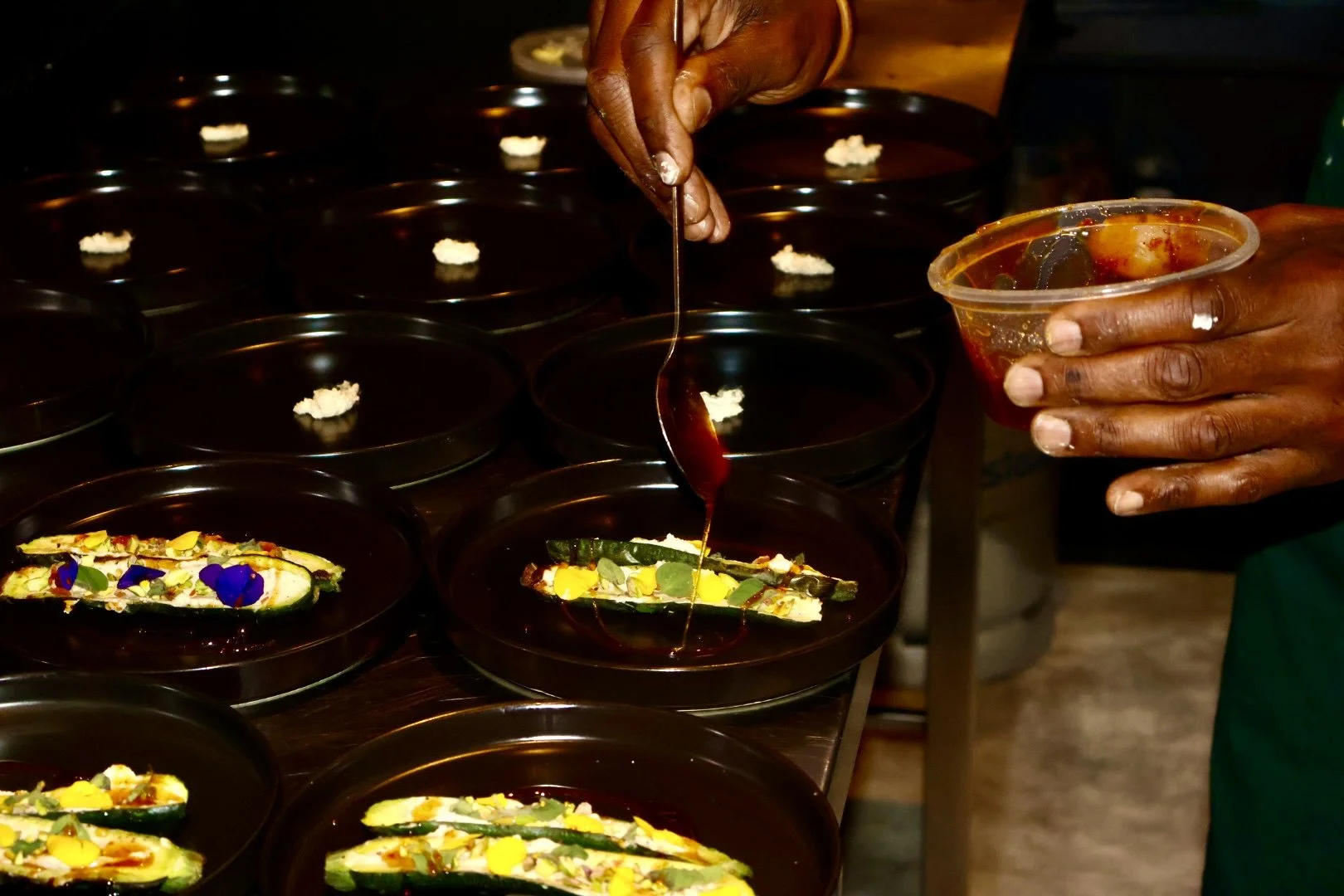
Chef Tarik, as the chef at the table, what are we expecting from the food?
Tarik: For the food I was drawing from multiple spaces. Number one has been my experience living here for the last six or seven months. I live in Bo-Kaap, right in the heart of a Muslim community. There's a lot of influences between living here, my love for food, my love for spices, and honestly what comes out each season here compared to home.
Now, at home we have great produce, but what's here - the seafood is amazing. The meat is amazing. And so I'm basically just pulling from different spaces, be it here, be it home, be it my years of just travelling and my love for spices.
There'll definitely be some storytelling, just letting folks know the importance of this - the connection that humans have between food and drink, and where it all stems from. And how we're all really very similar, no matter where we are in the world. I have a mantra where I say, if I can make all these ingredients harmonise on a plate, why can't we harmonise as a people?
On your menu I'm noticing somewhat of a Levantine influence and with your past menus as well. Is there a specific reason that that palette or that region throws you attention?
Tarik: Yeah, I grew up in a Muslim family, so the majority of my young life, I was basically around a Muslim environment. My parents converted to Islam just before I was born and they're from the South.
I have influences from Pakistan, India, Malaysia, Indonesia, Vietnam, Cambodia, and then all, you know, all throughout the Middle East, North Africa. And so there's a lot of that because of just how I grew up. So the question is how can I find a way to blend those and just see what comes about.
And a lot of it is just my experience of travelling which has allowed me to really just create dishes. It’s actually almost easy now. A lot of times I don't really test anymore. Because I understand the palate now. And so it almost feels like it's like a lab now. And the guests will be my test subjects.
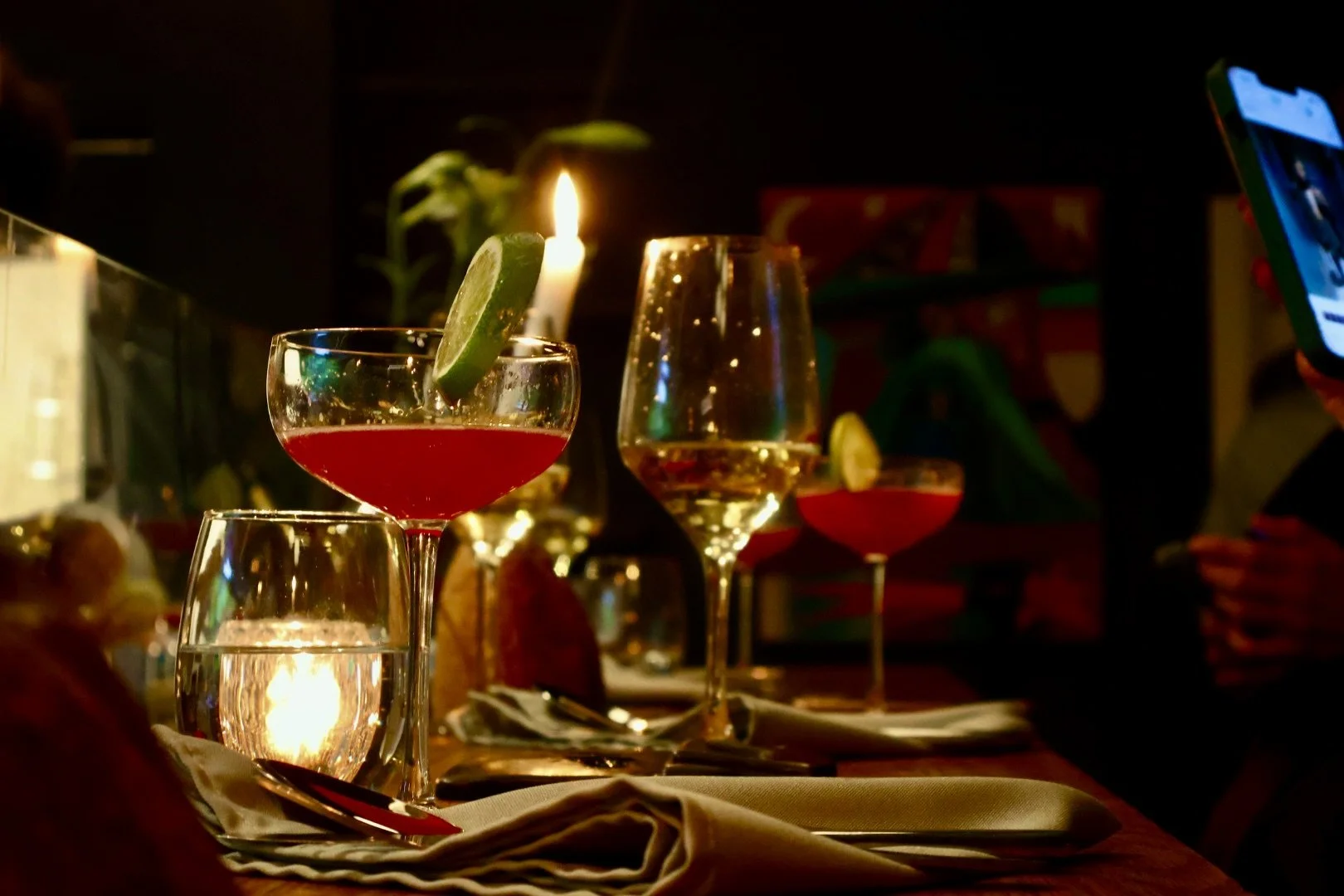
And then Thato, how did you and Dwight approach pairing the dishes, from a mixologists perspective?
Thato: So we took Chef T’s dishes and ingredients as a baseline, and then from that, we wanted to highlight and complement the ingredients he used in a similar, but also different way.
My favourite one is Summer, which is the Hibiscus Gimlet which plays with the rich elements of the Bo-Kaap Butters. There's a lot of rich elements and acids that cut through the rich elements. So what we did was do the exact same thing but within a hibiscus gimlet, which uses the tartness from the hibiscus but also highlights the floral notes. Which is just an example of many ways we played around with the layers of the cocktails.
How would you guys compare or liken the concept of pairing cocktails to pairing your individual forms of creativity in a project like this?
Tarik: I feel like our team is like a music track, you know? I feel like the food is kind of the drums, the drinks are the, the hi-hats, the illustration is the musicianship, like the keys, and then, the visuals and the curation is like basically the CD artwork and the idea of the drop. And if you notice the drop is so key, but in order to do the drop, you have to do it in a certain way, and that requires a certain group of individuals that are in an alignment for the drop to succeed.
That's what it really feels like. It just made sense.
There were things in my mind I had already known. I was like, one of these days, I'm gonna manifest meeting the right people. For instance, since I've been here, I've seen Ricky’s work all over the place. And honestly, it wasn't even online - I saw a poster. And I was like, yo, I need that. I was like, who is he? Who is this dude? I got to meet him. And shout out to AKJP for being the hub space - not just for Libation, it's just a hub for creatives. It's kind of like the home base for Voltron.
Ricky: What it was nice was how we would create. JJ created like a nice structure, but then still let me fill up some of the gaps, you know? Like his copy wasn't dictating where I should go, but more of the overall vibe. I could sense the direction of where it was going, and then I also added my own thing on top of that. That's how we developed the logo and how we developed the language.
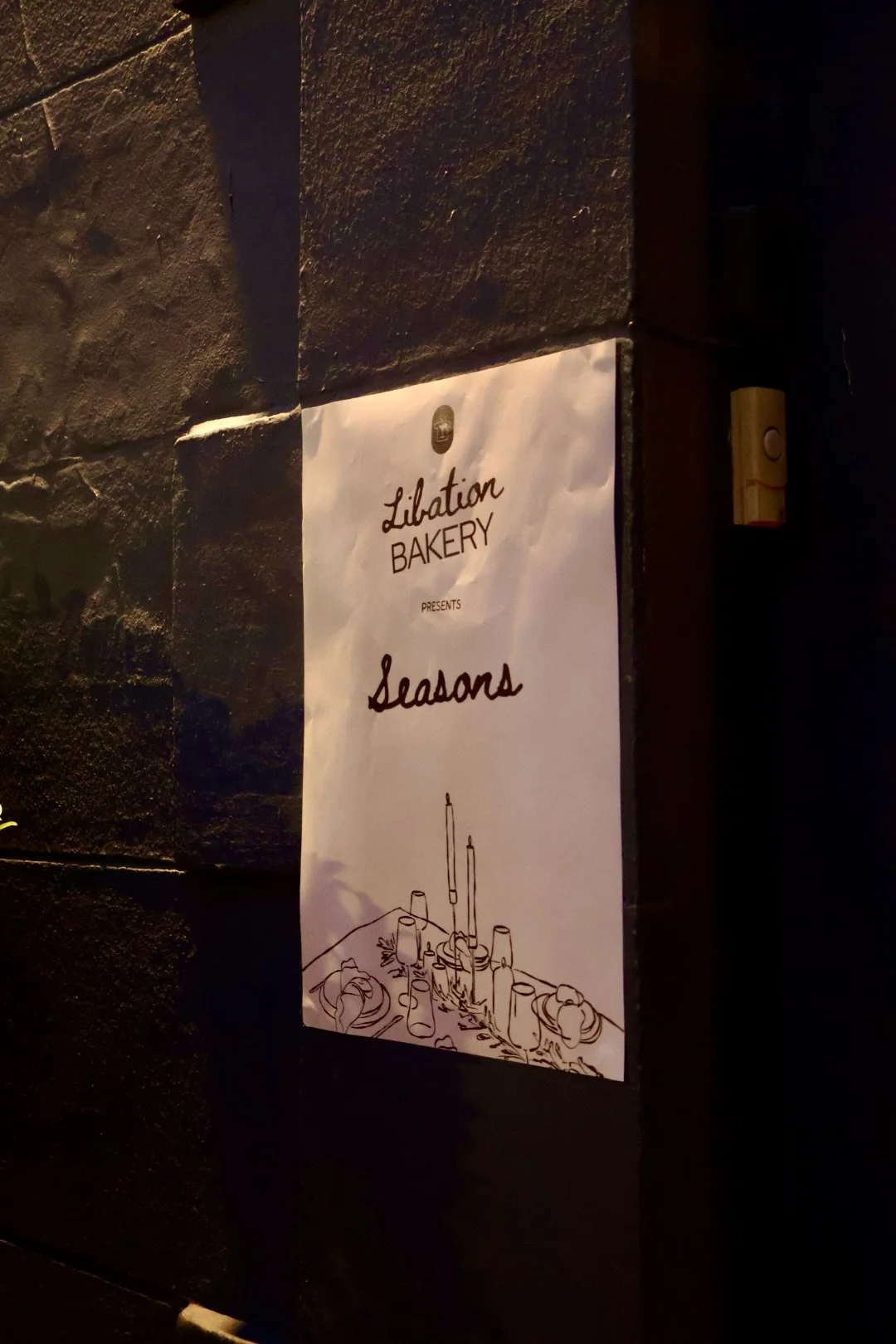
Luvuyo: Learning about the menu, to how it mixes in with the drinks pairing, and then speaking from our end, the colour palette and the logo - by the time I had had all of the puzzle pieces, it was easy for me to put the puzzle together and really feel the image.
I could then figure out that this is what it's gonna look like. So on the day, this is how the tables are going to look like, let's have this as a setting, or as a centrepiece at the table. Let's actually bring this kind of vibe in terms of sound curation to complement this.
So it was very, very simple for me after everybody had already placed their piece of the puzzle for me to see, it's just that piece missing, and for me to put it together.
I had met most of the gentlemen through this project, but knew of them for a while. You'd go to AKJP and have a conversation with them and not know the intricacies of what he's doing. Bumping into chef and not knowing like, damn, you actually like a chef chef.
So putting all of the puzzle pieces together, all the puzzle pieces from our personal lives into this project, it's so nice to see that the biggest thing that we have is a level of humility, where we really put so much pride into our work that our work literally precedes us. By the time I bump into these gentlemen you realise that you know their work before you even met them. It's very intriguing.
I think that's the major essence of what we're just trying to establish. Your work precedes you but there is a human being behind the work. We don’t live bragging about our work and trying to make that who we are.
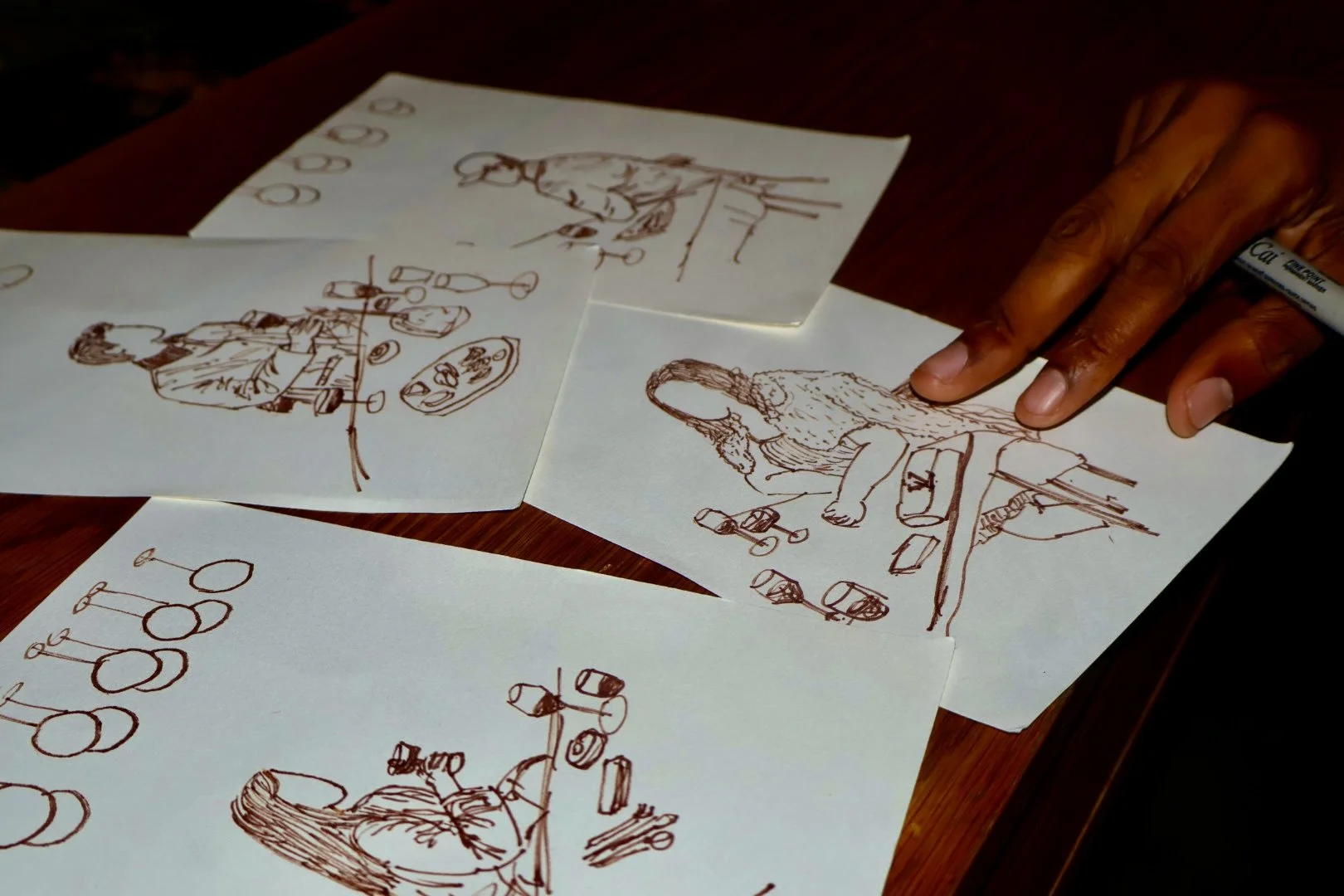
Speaking on the concept of blackness and representation, how is this pop-up different from any other pop-up in the scene?
Tarik: Well, you know, I've been cooking for 35 or 36 years. Back home, I'm basically known as the king of pop-ups. And the only reason why is because that is what community meant to me. I love just bringing people together and a pop-up, since I didn't have a true physical space that I own, the pop-up was like the perfect vessel for folks to be able to bring together.
But when moving out here, I just kept on seeing things that, I won't say irked me, but I just felt like it was missing, you know. Like when I 1st moved out here, I think the very 1st place I went and ate, I was at EDGE . And shout out to Vusi, let’s just put that out there right now. Shout out to Vusi and his wife for really showcasing what refined African cuisine can look like through the black lens.
And that's the thing about me coming here and going into some of these world's best 50 restaurants, just getting a glance and just seeing like literally every other restaurant, all up and down Bree, anywhere pretty much I've seen is like the kitchen is black but the front of the restaurant is the opposite. And so I feel like we need to do more than just give you some food, give you some drink and maybe play some music. Let's really give them something that they have never seen.
I work with youth. I've been teaching kids cooking for 20 plus years, so we're gonna have a youth component added to this. And that's another thing that we need to think about too. Yeah, we are living this moment, but once this moment is done and once we are done, Who's next in line? Where are all of our tools gonna go? So why not hand the baton over to the next in line?
So if we can create a vessel for them to be able to be a part of something and they can see themselves doing. Even if they don't even want to do a pop-up, even if it's completely opposite, why not do it from a black lens?
If people want to have an issue with that, I'm not worried about that. There's plenty of other places that have white faces. There's plenty of that here. But we need more black representation through food and drink in the city. Period.
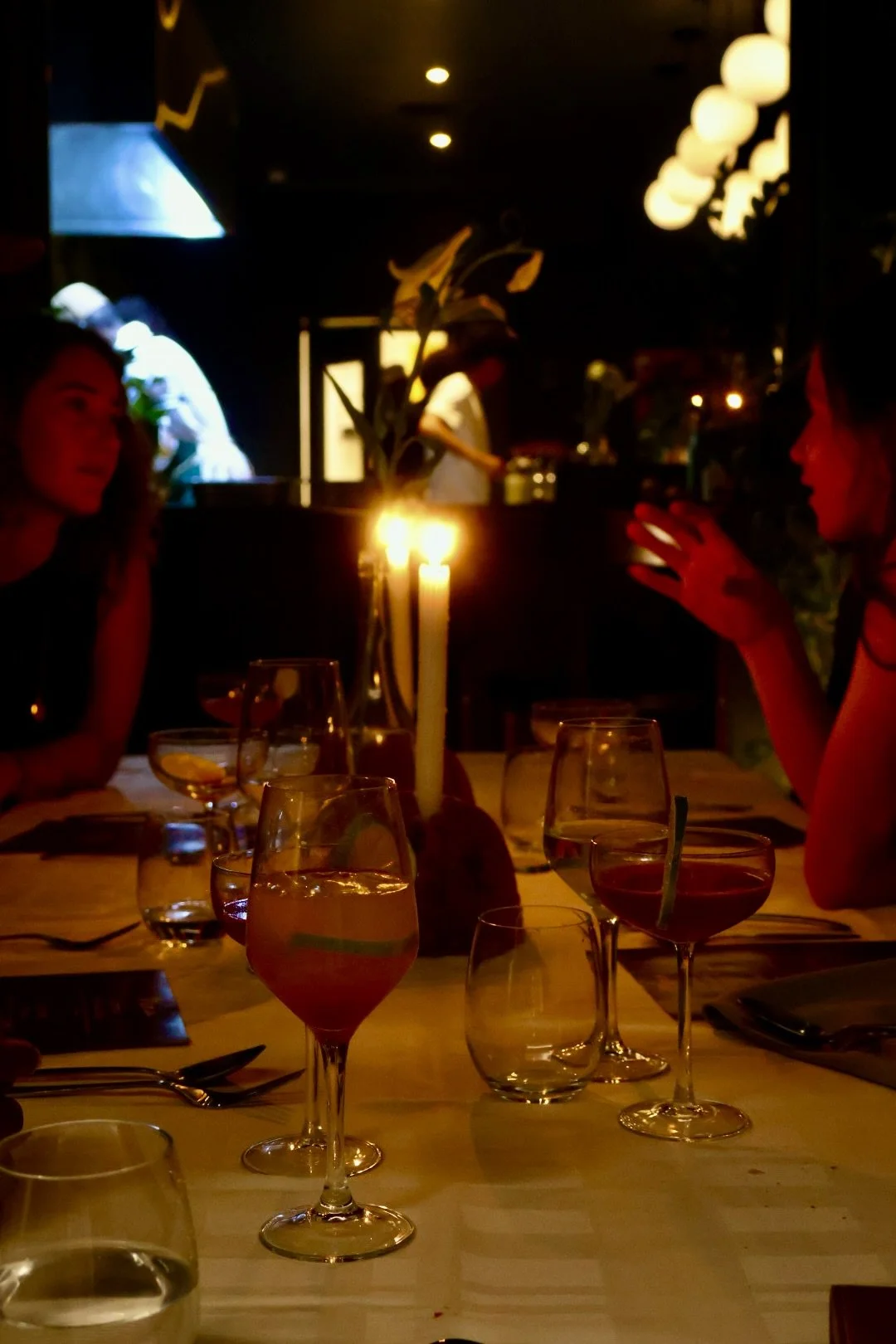
What can people expect from your first event at One Park?
Jay Jay: We could ramble on about everything but one of the most important things, and I think it's something that I've taken from everyone here is understanding that the strongest thing you can do for another person is make them believe something. And to believe in themselves.
And every point that's been mentioned will reflect the idea that by doing what you're doing, if you can make someone believe that they're enough, to bring what you can to the table, then that is enough for you to believe that you have a role to play.
That's what we want to do for everybody when they walk in tomorrow evening, to understand that yes, you're walking into our world, but just as much as it is ours, it is yours as well. And whatever you contribute in the ways that you do, it does not make you lesser than it actually makes you more, and it's an opportunity for you to be yourself. So we're happy to be able to create the platform, happy to be able to establish something, and we hope that with the next few generations and people moving into Cape Town with big hopes and dreams, that this can be the start of them believing in themselves being able to do something like this.
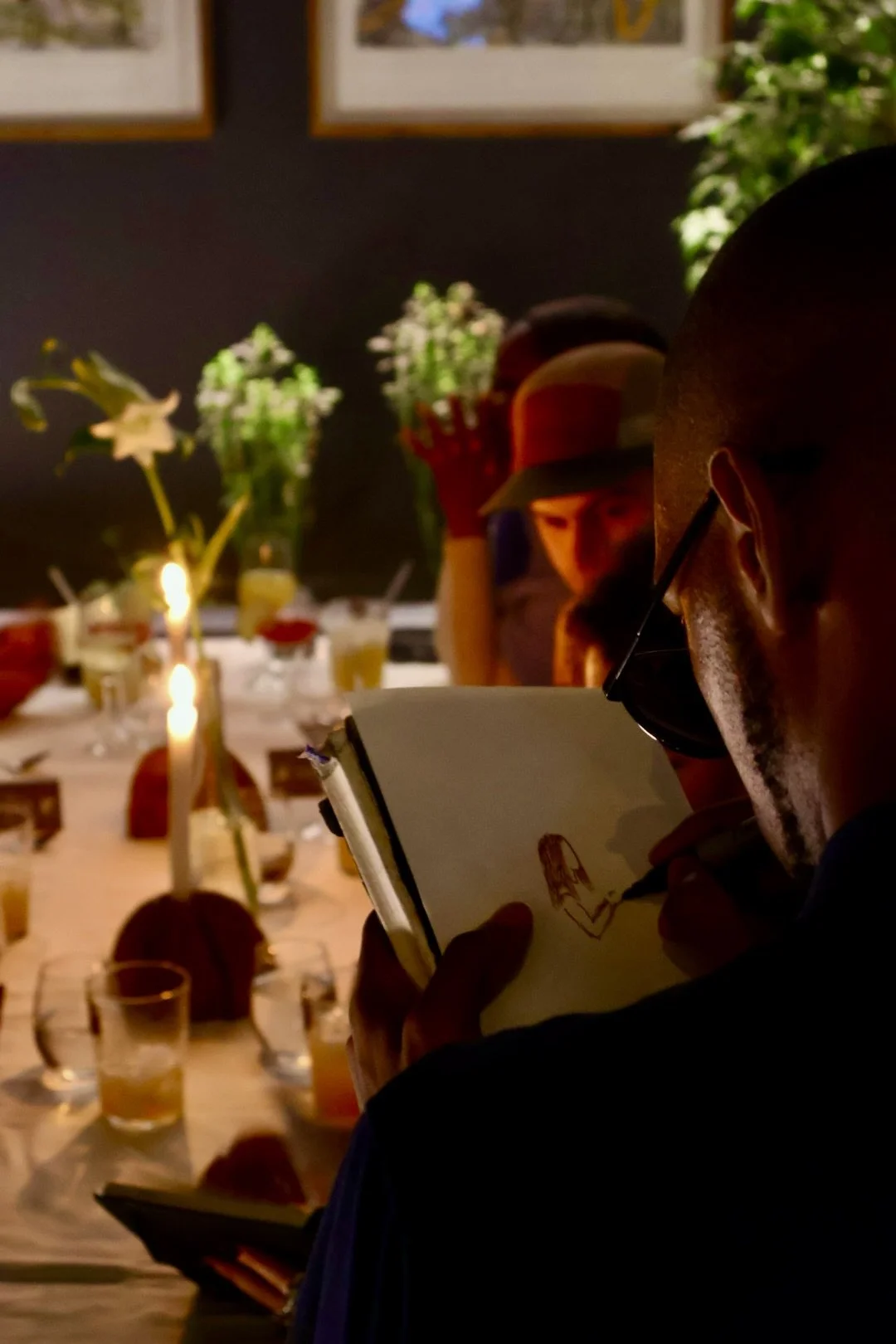
What's your opinion of the current cultural landscape of the city and where do you see it going from here?
Ricky:I think everyone knows Cape Town has culture in it, and I think it's growing. In terms of unison, there's bits and pieces, right? It's not fully in like a cycle, it's always like a rocket here, rocket there. But it would be great to see it being like stars which light up the night all the time.
As long as people have ideas, but people are scared to start, right? I love starting new things because I know it's something different. Even if it's not different there can never be too much of something because everyone has a different way of seeing things. But currently in Cape Town, we are struggling with the overall idea of starting, because we want to be at the level of what we desire. But we forget that it's a whole process, you know?
You can start alone. You can start with someone before you become a whole conglomerate. Before you become like a whole big thing, like, you can start alone. You must write, put it out there. It’s just a matter of starting it now and the ripple effect of the consistency of what you do will take you there.
Luvuyo: We were saying that if you don't have motion in 2026, that's your fault. It's definitely a you problem because the opportunities are endless - it just requires work. Just put in the work, and work towards your dreams. Most things are attainable and accomplishable. Especially once you put in the work, people that think like you and people that are in the same vicinity or direction to where you're going, will link with you in order to build what you want. It doesn't always take money. There's many people who would love to get involved with you and build from scratch if you're just willing to build.
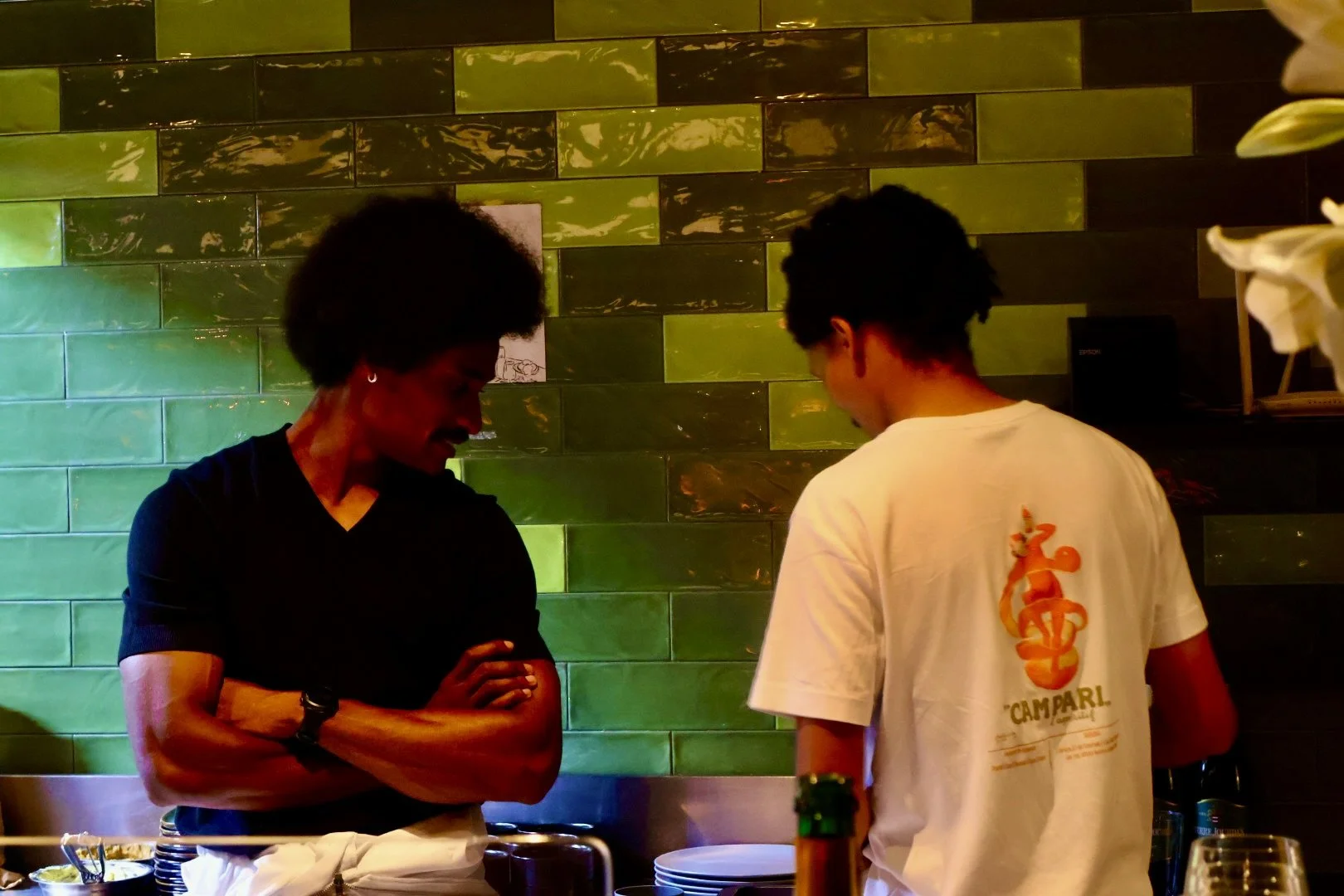
Libation Bakery’s next instalment (The Farmer, The Fisherman, The Butcher and The Baker) will be hosted this Wednesday the 10th of June at One Park.
If curated dining is up your alley, grab a couple tickets and go break some bread with the gents from Libation. Its definitely worth a bite.